Posts





Oil production has begun falling at all of the major Western oil companies, and they are finding it harder than ever to find new prospects even though they are awash in profits and eager to expand. Read the entire article. An even more troubling trend is the Democrats war on our oil industry. Democrats have made an industry for the past several decades of warring on capitalism. God help us, but they might win.
The Democrats are using record oil company profits to show the evils of capitalism. Obama promises to take those profits and redistribute them to the masses. It is populism at its worst and, in the reality of today, could irrevocably harm our oil industry, forcing us into even more reliance on rogue states for our energy needs. As it is, we know import 75% of our daily oil needs.
Entering the argument today is the NYT, pointing out that our oil companies are in trouble with declining production, irrespective of high profits from record oil prices. As the NYT notes, the oil companies are quite willing to invest their profits into more exploration and exploitation of new resources, but the opportunities are not available largely because governments, including the U.S., are shutting them out. The NYT also discusses the role of supply and demand in regards to both profits and the future of oil. This is a very good article. I do not know how it got by the NYT editors.
________________________________________________________
This from the NYT today:
Part of the reason is political. From the Caspian Sea to South America, Western oil companies are being squeezed out of resource-rich provinces. They are being forced to renegotiate contracts on less-favorable terms and are fighting losing battles with assertive state-owned oil companies.
And much of their production is in mature regions that are declining, like the North Sea.
The reality, experts say, is that the oil giants that once dominated the global market have lost much of their influence — and with it, their ability to increase supplies.
“This is an industry in crisis,” said Amy Myers Jaffe, the associate director of Rice University’s energy program in Houston. “It’s a crisis of leadership, a crisis of strategy and a crisis of what the future looks like for the supermajors,” a term often applied to the biggest oil companies. “They are like a deer caught in headlights. They know they have to move, but they can’t decide where to go.”
The sharp retreat in all of the commodities’ prices over the last month, about 20 percent, reflects slowing global growth and with it reduced demand for more oil in the short term. But over the next decade, the world will need more oil to satisfy developing Asian economies like China. The oil companies’ difficulties suggest that these much-needed future supplies may be hard to come by.
Oil production has failed to catch up with surging consumption in recent years, a disparity that propelled oil prices to records this year. Despite the recent decline, oil remains above $100 a barrel, unimaginable a few years ago, causing pain throughout the economy, like higher prices at the gas pump and automakers posting sizable losses.
The scope of the supply problem became more clear in the latest quarter when the five biggest publicly traded oil companies, including Exxon Mobil, said their oil output had declined by a total of 614,000 barrels a day, even as they posted $44 billion in profits. It was the steepest of five consecutive quarters of declines.
While that drop might not sound like much in a world that consumes 86 million barrels of oil each day, today’s markets are so tight that the slightest shortfalls can push up prices.
Along with mature fields, the companies have contracts with producing countries whose governments allocate fewer barrels to oil companies as prices rise.
“It has become really, really difficult to grow production,” said Paul Horsnell, an analyst at Barclays Capital. “International companies have a portfolio of assets in areas of significant decline and no frontier discoveries to make up for that.”
As a result of the industry’s troubles, energy experts do not expect oil supplies to grow this year in countries outside the Organization of the Petroleum Exporting Countries. Global demand for oil is expected to expand by 800,000 barrels a day, mostly because of rising demand in China and the Middle East, despite lower consumption in developing countries.
This imbalance between supplies and demand will be one thing that OPEC ministers will consider when they meet next month to decide whether or not to increase their production. OPEC has about 2 million barrels a day in untapped capacity that its members control.
The new oil order has been emerging for a few decades.
As late as the 1970s, Western corporations controlled well over half of the world’s oil production. These companies — Exxon Mobil, BP, Royal Dutch Shell, Chevron, ConocoPhillips, Total of France and Eni of Italy — now produce just 13 percent.
Today’s 10 largest holders of petroleum reserves are state-owned companies, like Russia’s Gazprom and Iran’s national oil company.
Sluggish supplies have prompted a cottage industry of doomsday predictions that the world’s oil production has reached a peak. But many energy experts say these “peak oil” theories are misplaced. They say the world is not running out of oil — rather, the companies that know the most about how to produce oil are running out of places to drill.
“There is still a lot of oil to develop out there, which is why we don’t call this geological peak oil, especially in places like Venezuela, Russia, Iran and Iraq,” said Arjun Murti, an energy analyst at Goldman Sachs. “What we have now is geopolitical peak oil.”
Western companies are far better than most national oil companies at finding and extracting petroleum, experts say. They have developed advanced exploration technologies and can muster significant financing to develop new fields. Many of the world’s exporting states, however, have spurned their expertise.
Oil company executives see a straightforward explanation: a trend known as resource nationalism. They contend that they have been shut out of promising regions by a rising assertiveness in the Middle East, in Russia, in South America and elsewhere by governments determined to keep full control of their oil.
Even in places where they are allowed to operate, the Western oil companies face growing problems. Countries like Russia, Algeria, Nigeria and Angola have recently sought to renegotiate their contracts with foreign investors to capture a bigger share of the profits.
“The problem with the supply side of the equation is a problem of accessing the resources in the ground so they can be explored and developed,” Rex W. Tillerson, the chairman of Exxon, said in a recent interview. “That’s a political question where governments have made choices.”
This sense of being hemmed in helps explain why the Western oil companies want more offshore drilling in the United States. They see it as one of their few options.
These companies have also tried to diversify. They have turned to natural gas as a profitable source of growth. They are tackling hydrocarbon resources, like deep-water reserves, heavy oil or tar sands. And some companies, like Shell and BP, are investing in renewable fuels.
Unquestionably, the oil companies could have done more. They failed to invest heavily in exploration after the oil-price collapse of the mid-1980s, which lasted through the 1990s.
In 1994, the top five oil companies spent 3 percent of their free cash on share buybacks and 15 percent on exploration. By 2007, they were spending 34 percent of their free cash on buybacks — in effect, propping up their share prices — and a mere 6 percent on exploration, according to figures compiled by a team led by Ms. Jaffe and Ronald Soligo of Rice University. As a result, some experts warn that supplies will fall short of the demand over the next decade, perhaps sending prices well above today’s levels.
At a recent conference in Madrid, Christophe de Margerie, the chief executive of the French company Total, said the world would be hard-pressed to raise supplies beyond 95 million barrels a day by 2020. Only a few years ago, forecasters expected 120 million barrels a day by 2030, a level many analysts now view as unrealistic.
The major companies picked up their capital spending around 2005, although much of the increase has been offset by the soaring cost of development. Exxon, for example, expects to spend about $25 billion annually for the next three years to expand its business, compared with $15 billion a year from 2002 through 2006.
“It’s amazing the difference from the 1970s, where a lot of money went into exploration, development and production of new resources,” said Paul Stevens, a senior research fellow at Chatham House, a London policy research organization. “It is happening a little bit now, but it is not going to be enough.”
As the power and clout of Western companies erode, the world may become increasingly dependent on government-controlled entities for oil.
While some may be up to the task, like Saudi Aramco, others, like Petróleos de Venezuela, suffer from bureaucratic inefficiencies and political interference.
“We are going to depend on the Venezuelan, the Nigerian or the Iranian oil companies for the future of our oil supplies,” said Bruce Bullock, the director of the energy institute at Southern Methodist University. “This is a troubling trend.”
Showing posts with label Venezuela. Show all posts
Showing posts with label Venezuela. Show all posts
Tuesday, August 19, 2008
Divorced From The Political Histrionics, NYT Discusses Oil Profits, Supply & Demand

Thursday, April 24, 2008
Criticism From The Left On Obstruction Of The Colombia Free Trade Agreement
For seven years, Democrats have rightfully complained that President Bush has gratuitously antagonized the world, exasperating our allies and eroding America’s standing and influence. Read the entire article.
The obstruction of the Colombia Free Trade Agreement by Democratic leaders and the Dem presidential nominees is every bit as pathologically partisan as their stand on Iraq and Homeland Security issues, such as whether to grant immunity to the telecom industry. In none of these cases are the best interests of the U.S. and its allies considered. The carefully staked out far left positions are designed to pander to special interests and are aimed at gathering power. You can begin to realize how transparent these detestable people really are when those on the left with some degree of intellectual integrity become highly critical of their actions, as does Nicholas Kristof today on the issue of obstructing the Colombia Free Trade Agreement.
__________________________________________________________
This from Mr. Kristof writing in the op-ed pages of the NYT:
But now the Democrats are doing the same thing on trade. In Latin America, it is Barack Obama and Hillary Clinton who are seen as the go-it-alone cowboys, by opposing the United States’ free-trade agreement with Colombia.
. . . Colombian cities like Medellín were the most dangerous cities in the world in the 1980s and ’90s, but now they are thriving and homicide rates are well below those of some American cities.
One reason is those bouquets you buy, entering duty-free from Colombia. These days Colombia is the world’s second-largest exporter of flowers after the Netherlands, and almost 200,000 people work in the flower industry. Up to 28 cargo planes a day carry flowers from Colombia to the U.S.
Better carnations than cocaine, no?
Critics of the free-trade pact worry that it would hurt American workers. But Colombian goods already enter the U.S. duty-free; what would change is that American exporters would get access to the Colombian market.
(Colombia is pushing hard for the pact not because of any immediate trade benefit but because its duty-free access to the U.S. must be regularly renewed. Businesses are reluctant to invest in flower farms or garment factories unless they know that they will be able to export to the U.S. for many years to come.)
Some Democrats point out that Colombia’s government has been tied to paramilitary units that kill union members. It was important for Democrats to raise these concerns — forcing the Colombian government to crack down on paramilitaries and prosecute those who murder unionists.
But Colombia’s progress has been immense. Assassinations of union members, while still a problem, have fallen 80 percent since 2002. Last year, the murder rate for union members was 4 per 100,000, reaching levels far below the homicide rate for the general public.
. . . The last few years have seen enormous gains in security and the quality of life in Colombia — and that’s why President Álvaro Uribe has an 85 percent approval rating.
I asked President Uribe on Monday if there was concern among Latin leaders that Democrats in Congress are tugging the U.S. away from its historic commitment to free trade. He said bluntly: "I don’t want to imagine this scenario. It would be devastating for the good relationship between the United States and our region."
To their credit, a large group of prominent Democrats from previous administrations have strongly endorsed the trade accord, declaring that it is "in both our vital national security and economic interests." But the presidential candidates aren’t listening.
Democrats instinctively criticize Mr. Bush when he harms America’s standing in the world. That’s easy. But a test of intellectual honesty is your willingness to hold your own side to the same standard and to point out pandering in those politicians you normally admire. . . .
Monday, January 21, 2008
Interesting News - 21 January 2008
 In Venezuela, a judge who speaks against the regime is named on broadcast television as an enemy of the state. Hours later, she was shot and the person with her murdered. Venezuelan police have termed a car-jacking – prior to the completion of an investigation. Read the story in PJM. Meanwhile, Hugo show us what happens when you get government interference in the economy.
Thomas Sowell remembers 1968 and finds the reality of the year’s legacy differs greatly from the myth.
No-Knock warrants are dangerous for all parties. Classical Values has some troubling thoughts – and the report of a case with the worst possible outcome.
If you have a reasonable concern about energy prices, the first place to take your complaint is the closes Democrat. Ask them why we can’t drill for oil in Anwhar or off of our coasts, why we can’t build any nuclear reactors, and why we cannot build new refineries.
Biofuels will not cut greenhouse emissions and the costs do not outweigh the benefits – so says Joint Research Centre of the EU. On top of what this investment in biofuels is doing to food prices, mandating ever greater use of biofuels seems increasingly insane. But don’t tell that to the EU Commission, who are apparently going to simply ignore the report.
"Step right up folks and get your tickets to the greatest scam on Earth as we pay homage to those much-maligned scientists, geologists, climate researchers and marginalized Global Warming Skeptics the world over who refuse to be silenced by the skeptiphobics who would still the voices of reason." It’s a global warming carnival at the CFP. (H/T LostInto2)
While I’ve been unconcerned up to the moment with the latest fad, "sharia finance," I’ve obviously been too complacent. Dinah Lord posts on Sharia finance and the ties of many involved to extremists.
Omar Bakri has some thoughts on Muslims in the UK’s police and military. As does Lionheart.
Sheik Yer Mami is on fire. Read his posts about: compulsion of religion in Egypt; litigation jihad in the Netherlands aimed at silencing any criticism of the religion of peace; and some must see vidoes:
Islam in the UK is "not about bringing two world’s together."
And also Pat Condell who remarks eloquently on the Mark Steyn cases and its larger implications:
And lastly, a Public Service Message on the crisis of Journalistic Violence from Iowa Hawk whose incredible spoof of the odious NYT is quick becoming legend.
Monday, December 3, 2007
More Hugo
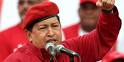 Rick Moran at Right Wing Nut House brings up an interesting point. The facts on the ground suggest vote fraud in Venezuela did occur, but the spread was so great that Hugo's machine was simply unable to change enough votes / stuff enough ballots to make it come out their way. If in fact that is the case, one could expect that Hugo will do his best to improve the efficiency of his machine and make sure the numbers come out "right" the next time. Everything about Hugo indicates that he will not accept this "no" vote beyond paying it lip service for just as long as he must.
And as Rick documents, the lefty blogosphere has more then a few people praising Hugo and making unfavorabe favorable comparisons to Bush who, we are told, is a dictator and who refused to accept the will of the people. All of which leaves one to ponder whether such idiocy is learned or genetic.
Monday, November 12, 2007
Shopping in a Socialist Paradise
 One would think that the world's would-be dictators, socialists and communists who hunger for power would at least have figured out by now that, while instituting the trappings of a police state is one thing, introducing the trappings of a socialist, command directed economy is another thing entirely. One needs to look no further than China and the Soviet Union to figure that one out. The difference between Deng Xiao Ping and Krushev would seem to be that someone gave the former a copy of The Wealth of Nations. Apparently, they are out of Adam Smith down in Venezuela also. Thus, while the darling of the Hollywood left, Hugo Chavez, is off attempting to turn all of Latin America into a Socialist heaven, average Venezualens seem to have more prosaic concerns:
Venezuelan construction worker Gustavo Arteaga has no trouble finding jobs in this OPEC nation’s booming economy, but on a recent Monday morning he skipped work as part of a more complicated search — for milk.
The 37-year-old father-of-two has for months scrambled to find basic products like cooking oil, beef and milk, despite leftist President Hugo Chavez’s social program that promises to provide low-cost groceries to the majority poor.
“It takes a miracle to find milk,” said Arteaga, who spent two hours in line outside a store in the poor Caracas neighborhood of Eucaliptus. “Don’t you see I’m here slaving away to see if I can get even one or two of those (containers)?”
Venezuelan consumers are increasingly facing periodic shortages of basic food products as the economy shows signs of overheating amid record revenues from an oil boom. . . .
A black market has sprung up where informal vendors illegally peddle bags of sugar, beans and precious powdered milk — for as much as double the regulated price. . .
Read the article at Hillbilly Politics where, as she puts it, money can't buy me love, [but in] Venezuela, it can't buy me food, either.
Subscribe to:
Posts (Atom)